


As you open the door, a grassy wall with a bright neon sign greets you. Beige dreamcatchers hang on the walls. Blazing red roses sit on a coffee table, next to a glass cabinet housing sparkling crystals. A small bowl of candy rests on a table near the door, and a gold Buddha hand is perched next to the window. A sign on the wall reads “happy place,” written in a stringy cursive font.
No, this is not a spa– this is a Brockton tattoo shop.


Photos of 1Eleven Tattoo Collective in Brockton, MA (Photo Sean Perry)
You don’t often see a tattoo studio owned by two women of color. However, for Joana Coli and Courtney Barnette, their passion has always overpowered the obstacles set in front of them. They began tattooing 15 years ago, and a decade and a half later, they’re still going strong.
The duo's success exemplifies a powerful shift in the tattoo industry. 20 years ago, shops were not an inclusive space. Chances are, your artist would whip out a fat booklet of flash tattoos and prompt you to pick one. No incense, no oil diffusers, and certainly no lollipops. If your skin was too dark, you were out. If you were a woman, forget about it.
Despite the industry's history of insensitivity and ignorance, a surge of progress is hitting the industry. Today, tattoo shops are increasingly prioritizing wellness, inclusivity, and cultural sensitivity more so than ever before.
Beyond just essential oils and incense, a new wave of artists are redefining the tattoo industry and reshaping what it means to put ink to skin.
Coli and Barnett opened their own shop in 2018, renting out a tiny studio in Brockton that they could barely afford. The shop's address, 111 Torrey St, inspired the name of their shop, 1Eleven Tattoo.
“We're literally like family, more like family than friends, " Barnette explained.
“And not to mention we're Cape Verdean, so we probably are actually family,” Coli joked.
1Eleven moved to a larger location in 2023 after the lack of space became too limiting. Now, they're planning to construct a new yoga studio.
Despite the drastically different cultures and mindsets surrounding the two, yoga and tattooing share plenty of similarities. They each serve as a form of self care, where bodily autonomy is prioritized first and foremost, Barnette says. Each has an element of pain, whether that be the stretch of your muscles or the poke of a tattoo needle, but it’s a pain that is chosen, not forcibly inflicted, in the pursuit of greater fulfillment.
The thought that these two practices could share a space would be laughable just a few decades ago. The vast majority of 20th century American tattoo shops were rough, rugged, and boisterous, usually owned by a straight white man who employed a cast of artists that looked and acted just like him. The industry oftentimes embraced the most sinister parts of American society– misogyny, racism, and homophobia
In her thesis about gender in relation to labor, Dr. Emma Clare Beckett explains that “The masculine culture of the (tattoo) industry legitimises men’s knowledge over women’s and places men as the legitimate.” Women historically have been looked down upon and harassed in the tattoo world, especially during apprenticeships, where they’re forced to be vulnerable about their lack of experience.
Racism has been another big problem in the industry, whether it be malicious or unintentional. The name “tattoo” comes from the Samoan word “tatau,” which originally referred to the tapping sounds made by a Samoan bone tool during tattooing. Polynesians have been tattooing for over 2,000 years. Despite this, their styles have largely been stolen by white artists and gentrified into what is known today as a “tribal” tattoo– a diluted style that attempts to mimic the original Polynesian art form. Additionally, many other cultures have had their impacts on tattooing commodified in the United States, including Native Americans and Japanese, who both have had their traditional styles largely watered down and misinterpreted by artists outside of their community.
When tattoo artist and historian Michelle Myles picked up a needle for the first time 34 years ago, she never imagined that the art form could become mainstream. She entered the industry during a time when racism and misogyny were rampant, when tattooing was a profession defined by toughness and grit.
In 1991, the year she started tattooing, the art form was illegal in New York City. ”Now, I see tattooing popping up in commercials. Verizon commercials, drug commercials,” she explained.
Myles started her own hybrid tattoo shop and museum, Daredevil Tattoo, in 1997 on the Lower East Side of Manhattan. Throughout her years in the industry, she has seen the art form shift towards inclusivity; not just in terms of who can tattoo, but also who gets tattoos.
“It was definitely a very outsider thing to do, especially for women… Now, we see tattoos all over social media,” she said. “It is weird with it being so mainstream, you know. But the elements of what drew me to it are still there.”
Unlike artists today, Myles had to find success in the industry without the internet. She would hang out in shops in order to build connections with other artists, and get her work seen through physical magazines.
Artists today are practically forced to use social media if they want to succeed. Apps like Instagram are now hubs of networking, where artists are able to connect with clients as well as other tattooers.
One North Carolina artist, Dani Bee, relies on social media to share their work, just like many young artists.
For them, becoming a tattoo artist was a massive risk. They had just been laid off at the start of the pandemic, when the job market was incredibly stagnant. Mustering up all of the courage they had, they took a risk and began sending out a portfolio to local shops.
With a lot of hard work and a little luck, they landed an apprenticeship.
“I wasn't really willing to compromise and seek out an apprenticeship at a shop whose values I wasn’t interested in,” they explained. “Luckily, there are a lot more individuals these days who take it more seriously and really want to do it right. That wasn't really the case for many years. They just wanted to have someone who cleaned the shop.”
Just five years after picking up a tattoo needle, they started their own business, Southern Cryptid.
Growing up in a conservative family, Bee was discouraged from getting tattoos. They recalled as a child seeing a woman with a beautiful dress and large back piece. Their grandmother was quickly judgmental, but Bee was struck by the woman; she looked ethereal, like nobody they had ever seen before.
Today, they’re covered in a plethora of cute and creative tattoos, rocking dyed black and blonde hair and a mass of silver jewelry– a far cry from their conservative upbringing.
All of their mentors were supportive and nourishing, as they put it. They virtually have no tattoo horror stories from early in their career.
Barnette and Coli were not so lucky. They’re a bit older than Bee, and they started tattooing much earlier.
“I've worked with all guys– some of them are pigs. Sometimes they're inappropriate. Sometimes they make you feel uncomfortable… during that experience I would think, ‘This is validation for when I have my own job and there’s not gonna be any sexual harassment,’” Barnette recalled.
The two place a lot of value on creating a safe space in their shop for both the artists and clients; for Barnette, her desire to create a safe environment comes from her own experiences as a woman in the industry.
When she was first starting to tattoo, Barnette wanted nothing more than to apprentice under a man named Polo. Polo had given Barnette her first tattoo at the age of 16 in the back of a house. She didn’t know the man, and he didn’t know her, but the experience stuck with her. A few years later, when Barnette was 21, she tracked the man down. She popped up at his house and asked, “Do you remember me?” Polo responded, “Yeah. I never wanted to give you that tattoo.”
“That was crazy because he never remembered anybody,” Barnette added.
After reuniting with Polo, Barnette asked him to apprentice her. As she asked, she had one burning question: “Who am I going to practice on?” Polo responded, “Yourself.”
Barnette went home that night and tattooed herself. She came back the next day and showed Polo what she did. “He was like, ‘Oh, shit, you were serious,’” she said..
After Barnette had been apprenticing under Polo for a month or two, a new client started coming into the shop– a woman named Joana Coli. Coli’s husband Romero had been getting tattoos from Polo, and Coli started tagging along on his appointments. “I needed to see what he was doing over here, hanging out for long hours, coming home looking like he had fun,” she joked.
Coli would sit and draw in the shop while everyone was getting tattoos. She had been working in retail, where she had mostly lost touch with her creative side, and her trips to Polo’s shop provided her with some of the creative spark that had been missing. One day, Polo asked her if she had ever thought about tattooing professionally. “Nah, I don't think I can do that,” she responded.
Polo asked her incessantly, broaching the topic at every opportunity. Eventually, Coli agreed to give it a try. She bought her first ever machine with Polo.





_edited.png)

_edited.png)


_edited_edited.png)
_edited.png)

Coli's sleeve (Photo Sean Perry).
The two women were a bit skeptical upon hearing about the other from Polo– according to Barnette, her first inclination was to be a bit possessive. However, her mindset quickly shifted; “I was like, ‘Wait what? What am I doing? I don’t own him!’ Honestly, I was being crazy,” she laughed.
As soon as the two met, they hit it off. “I don't connect with every person I meet, and I don't attach to people that easily either. So we were meant to be probably,” Barnette said affectionately.
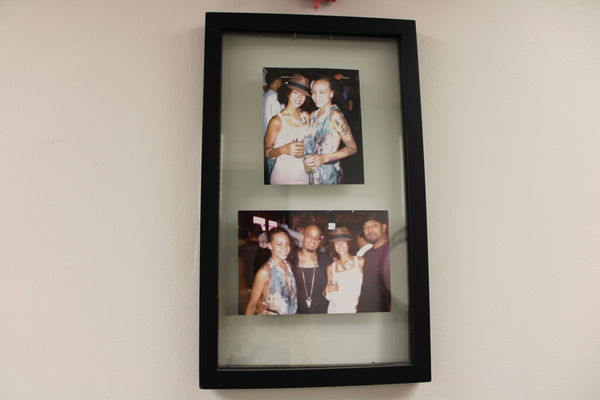
Barnette, Polo’s mentor Jesus, Coli, and Polo, circa 2010 (Photo Sean Perry).
Coli and Barnette, now in their 30s, have settled into the groove of their life as business owners.

Coli and Barnette (Photo Sean Perry).
Polo continues to work with them at 1Eleven, in addition to Aaliyah Barros, a former apprentice.


From L to R: Barros, Polo, Barnette, and Coli's shops (Photo Sean Perry).
While the autonomy that comes with owning their own shop is invaluable, the two agree that balancing being mothers, business owners, and soon-to-be yoga instructors can be overwhelming. “As a woman, you’re expected to do everything,” Barnette added.
The duo became interested in yoga as a way to release stress caused by their jam packed schedules. Tattooing requires holding contorted, uncomfortable positions for hours at a time. Yoga helps relieve that stress, something that Coli and Barnette describe as “totally restorative.”
Now, they’re ready to share their spiritual side with their clientele. “I feel like people really will enjoy the slower side. It's not all about strength and power. It's more about just being able to sit with yourself,” Barnette said.
1Eleven exemplifies a new connection between mainstream wellness culture and the once taboo art form of tattooing. Suddenly, shop owners are doing pilates before putting needle to skin.
Having multiple visible tattoos was once a way to fast track unemployment; the art form was viewed as grungy, unsophisticated, deviant. Today, however, as more and more young people with tattoos are entering the workforce, a shift towards accepting the art form in professional spaces is arising.


Charts showcasing Americans with one or more tattoos split by generation (Graphic Sean Perry).
Keegan Williams, a Los Angeles based freelance journalist, has been able to find career success while covered in ink.
Williams grew up in a small town in Northern Colorado. It was not an overwhelmingly conservative area, but as a queer person, they still felt undeniably different. From a young age, they had been fascinated by the unorthodox. “I had kind of an interest in early Ripley's Believe It or Not books. I remember getting them at the Scholastic Book Fair in elementary school, and that was actually where I first learned about tongue bifurcation,” they explained with a nostalgic verve.
That extreme level of body modification excited Williams. At the age of 26, they had the bifurcation procedure done.
“Tattooing was something that really allowed me to kind of embrace my femininity, embrace androgyny, embrace just being visibly queer and doing that on my skin,” Williams explained, fluffing up their shoulder-length blonde hair. Their muted green tank top fully exposed their inked arms, their pale white skin covered in a mosaic of colorful tattoos: small hearts, flowers, a black and grey owl, bright orange flames, a green and yellow cat, shiny pearls, and much more. Their arms possess an eclectic mix of feminine tattoos and striking horror pieces that bounce off of each other. For Williams, the unusual mix of styles and subject matters is hugely affirming. “They’re things that maybe don't explicitly link to gender, but also make me feel more at home in my body,” they explained, their pale blue eyes lighting up as their gaze traveled up and down their arms.
For a while, Williams struggled to find tattoo artists who were accepting and understanding of their queerness. Fourteen years ago, there weren’t a lot of choices for those with marginalized identities. It was a lot harder to vet who would be a safe option, who would embrace difference and who would scowl. “Tattoo culture for so long was rooted in masculinity, in certain subcultures that are very intrinsically linked to cis-heteronormativity,” Williams noted.
Purchasing a tattoo, especially today, is not a straightforward experience. It requires intense planning, constant communication, and a mutual sense of trust between client and artist. “It’s a very intimate act. Someone is touching my body. I'm spending anywhere between 2 to 5 to 6 hours with this person,” they exclaimed.
When Williams was getting tattooed by LA artist Nicholas Dane, something out of the ordinary struck them– on the intake form, there was a slot that allowed Williams to list their pronouns. The sight of this question filled them with unexpected joy; for Williams, it was an open invitation to authentically exist in the shop. Dane provided Williams with one of their most affirming tattoo experiences, where they felt safe enough to open up to him about their queer identity during tattoo sessions. Since then, Williams has been to Dane’s shop 5 times, building a personal relationship with him in the process.
For now, Williams has slowed down their tattoo journey. They want to save precious space for when they’re 40, 50, 60, and beyond. As their fingers trace the art they’ve collected over the past 14 years, one thing remains clear– Their tattoos are a vital part of who they are.
The tattoo industry is not perfect. Systemic issues still exist, and shops are continuing to make less and less money. An article by one shop, The Black Hat Tattoo, even states that the tattoo market is currently an “oversaturated, competitive market with a 50% drop in client flow.” Fewer bookings and more competition means that many shops can’t keep up with the bloated market.
Despite these issues, an important shift is still occurring– a shift that recognizes a tattoo as more than a transaction. It’s an act of permanent body modification that requires the utmost vulnerability and trust. The process of getting a tattoo for so long was framed as a painful, laborious experience that one needed to simply “get through,” a brutal test of will and pain tolerance.
It’s true that a tattoo, for the most part, will always hurt– a piece from even the most light-handed artist is still going to make you clench your teeth. However, when that extra effort is put in to make the process just that much more enjoyable, it does wonders for the client experience. Sometimes, that means putting out candy. Other times it means asking for pronouns and boundaries.
“We have so many female clients because a lot of guys in the industry have a hard time not being a creep,” Barnette said. “A lot of girls have had an experience or something that was weird or uncomfortable.”
1Eleven is working to create a space where everyone is comfortable being tattooed.
“It's a judgment-free zone,” Coli explained. “We're not here to judge. You can come in whatever shape or form you feel most comfortable in, and we're just here to work with you. The female energy here is warm and welcoming!”
Barnette puts it best– “It's an edgy kind of business, but we bring a softness to the edge.”

Coli and Barnette (Photo Sean Perry).